Have you ever felt a small, tight «knot» in your shoulder, neck, or back that seems to trigger pain in a completely different part of your body? That’s likely a trigger point — one of the most common and most overlooked causes of chronic muscle pain.
At G Therapy Center in Doral, FL, we treat trigger points every day in patients who’ve been dealing with unexplained pain for weeks, months, or even years. This guide explains what trigger points really are, why they form, how to recognize them, and why a physical therapist is often the best professional to resolve them for good.
What Are Trigger Points?
A trigger point is a small, hyperirritable knot that forms within a tight band of muscle fibers. When pressed, it can be painful locally, but the defining feature of a true trigger point is referred pain — pain that radiates or «refers» to another area of the body, sometimes far from the actual knot.
For example:
- A trigger point in the upper trapezius (shoulder/neck) can cause headaches or pain behind the eye.
- A trigger point in the gluteal muscles can mimic sciatica, sending pain down the leg.
- A trigger point in the jaw muscles can cause pain that feels like a toothache or ear pain.
This is why so many people in Doral search for answers about pain that doesn’t seem to match where the problem actually is — the real cause is often a trigger point somewhere else entirely.
Why Do Trigger Points Form?
- Muscle Overuse — Repetitive movements at work, sports, or exercise without proper recovery.
- Poor Posture — Prolonged sitting, hunching over a phone or computer, or sleeping in awkward positions.
- Stress and Tension — Emotional stress often causes people to unconsciously tense certain muscle groups (neck, shoulders, jaw).
- Muscle Injury or Trauma — A direct injury or strain can create a trigger point as the muscle guards itself.
- Sedentary Lifestyle — Weak, deconditioned muscles are more prone to developing tight, irritable bands.
- Dehydration and Poor Nutrition — Muscle tissue that isn’t properly nourished is more susceptible to forming knots.
Common Symptoms of Trigger Points
- A tender «knot» that you can feel under the skin
- Pain that radiates to another area when the point is pressed
- Chronic, dull aching pain that doesn’t go away with rest
- Reduced range of motion in the affected muscle
- Tension headaches, jaw pain, or unexplained tingling
- Muscle stiffness that worsens with stress or prolonged activity
The Most Common Trigger Point Locations in the Body
| Location | Common Referred Pain |
|---|---|
| Upper Trapezius (neck/shoulder) | Headaches, temple pain, neck stiffness |
| Levator Scapulae (side of neck) | Neck pain that limits turning the head |
| Rhomboids (between shoulder blades) | Upper back pain, burning sensation |
| Gluteus Medius (hip) | Pain mimicking sciatica down the leg |
| Quadratus Lumborum (low back) | Deep lower back pain, hip pain |
| Masseter (jaw) | Jaw pain, tooth pain, ear pain |
Why You Shouldn’t Ignore Trigger Points
Trigger points rarely go away completely on their own. Left untreated, they can:
- Become more sensitive and painful over time
- Lead to compensations in other muscles, creating new pain patterns
- Restrict movement and posture, increasing injury risk
- Contribute to chronic pain conditions and reduced quality of life
This is exactly why physical therapy is one of the most effective treatments for trigger points — it doesn’t just mask the pain, it addresses the underlying muscle dysfunction.
How Physical Therapy Treats Trigger Points
At G Therapy Center, our licensed therapists use a combination of proven techniques:
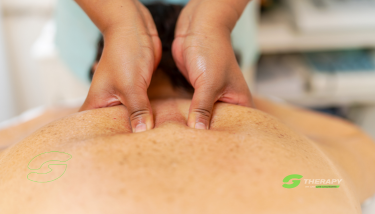
- Manual Trigger Point Release — Direct pressure and stretching techniques to deactivate the knot.
- Myofascial Release — Targets the fascia (connective tissue) surrounding the muscle to restore mobility.
- Dry Needling — A thin needle is inserted directly into the trigger point to release tension and improve blood flow.
- Therapeutic Stretching — Restores normal muscle length and reduces recurrence.
- Corrective Exercise — Strengthens surrounding muscles and corrects the postural or movement habits that caused the trigger point in the first place.
- Postural Education — Practical guidance for desk workers, athletes, and anyone with repetitive movement patterns.
Unlike a massage, which offers temporary relief, physical therapy treats the root cause — helping prevent trigger points from coming back.
When to See a Physical Therapist for Trigger Points
Consider scheduling an evaluation at G Therapy Center in Doral, FL, if you experience:
- ⚠️ Persistent muscle knots that don’t improve with stretching or rest
- ⚠️ Pain that radiates to another part of your body
- ⚠️ Frequent tension headaches or jaw discomfort
- ⚠️ Reduced range of motion in your neck, shoulders, or back
- ⚠️ Pain that interferes with sleep, work, or daily activities
Quick Facts About Trigger Points
- Trigger points are estimated to be involved in a large percentage of chronic musculoskeletal pain cases seen by physical therapists.
- They are more common in people with desk jobs, poor posture, or high physical/emotional stress.
- Dry needling and manual therapy have shown significant improvement in pain and mobility for patients with active trigger points.
- Good news: with the right treatment plan, most trigger points can be fully resolved without medication or surgery.
💡 Did you know? Trigger points can stay «latent» (present but not painful) for years until stress, poor posture, or an injury reactivates them — which is why prevention through proper movement and posture is so important.
Why Choose G Therapy Center in Doral, FL
At G Therapy Center, located in the heart of Doral, Florida, our team specializes in identifying and treating trigger points, myofascial pain, and chronic muscle tension using hands-on manual therapy, dry needling, and personalized corrective exercise programs. We help Doral residents — from office workers to athletes — finally resolve pain that other treatments haven’t been able to fix.
If you’ve tried massages, foam rollers, or stretching without lasting results, a proper physical therapy evaluation may be exactly what you need.
Schedule Your Trigger Point Evaluation Today
📍 G Therapy Center — Doral, FL 📞 Call us or visit our website to book your appointment 🩺 Same-week appointments often available for Doral and surrounding areas (Miami, Doral Isles, Downtown Doral, Trump National area)
Frequently Asked Questions
What’s the difference between a trigger point and a regular muscle knot? All trigger points feel like knots, but not all knots are true trigger points. A defining feature of a trigger point is that it causes pain to radiate to another part of the body when pressed.
Does dry needling hurt? Most patients feel a brief muscle twitch or mild discomfort during dry needling, followed by noticeable relief. It is generally well tolerated and performed by licensed professionals.
How many physical therapy sessions do I need for trigger points? This varies by patient, but many people notice significant improvement within a few sessions when combined with a home exercise and posture program.
Can stress really cause trigger points? Yes. Emotional and physical stress are among the most common causes of trigger points, especially in the neck, shoulders, and jaw.
This article is for informational purposes only and is not a substitute for professional medical advice. If you are experiencing persistent muscle pain or trigger points, contact G Therapy Center in Doral, FL