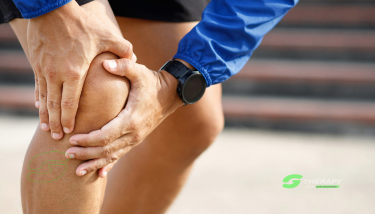
You just finished your run, and now your knee is throbbing. Or maybe it hurts during the
run — that sharp pain on the outside of the knee that forces you to stop. Either way, knee
pain is the #1 complaint among runners, and ignoring it rarely ends well.
Most Common Causes of Knee Pain in Runners
Runner’s Knee (Patellofemoral Pain Syndrome): A dull, aching pain around or behind the
kneecap. Worse when going downstairs, squatting, or sitting for long periods. Caused by poor
tracking of the kneecap during movement.
IT Band Syndrome: Sharp pain on the outside of the knee, usually appearing at a consistent
mileage during runs. The iliotibial band becomes tight and inflamed from overuse.
Patellar Tendinitis (‘Jumper’s Knee’): Pain at the front of the knee, just below the kneecap.
Common in runners who also play sports requiring jumping.
Meniscus Irritation: Clicking, locking, or swelling in the knee. Can be aggravated by downhill
running or sudden direction changes.
Knowing which type you have is essential — treatment differs significantly between them.
Should You Keep Running With Knee Pain?
This is the question every runner asks. The answer depends on the pain level:
- Pain level 1–3/10 (mild): You can often continue running, but reduce mileage by 50% and
avoid hills. - Pain level 4–6/10 (moderate): Take 3–5 days off, ice the knee, and do gentle stretching and
strengthening. - Pain level 7+/10 (severe) or any swelling, locking, or giving way: Stop running immediately and
seek professional evaluation.
Running through significant pain almost always turns a 2-week problem into a 2-month problem.
How We Treat Runner’s Knee in Doral
At G Therapy Center, our approach to knee pain in runners is comprehensive: - Gait analysis: We watch you walk and jog to identify biomechanical issues causing the pain.
- Manual therapy: Mobilization of the knee joint and surrounding tissues.
- Sports massage: Deep work on the IT band, quads, hamstrings, and calves.
- Strengthening program: Most runner’s knee is caused by weak glutes and hip stabilizers. We
fix that. - Return-to-run program: A gradual, structured plan to get you back on the road safely.
We also offer Bio G Scan gait and footprint analysis to evaluate whether your running shoes
and foot mechanics are contributing to the problem.
Prevention: How to Run Without Knee Pain - Never increase weekly mileage by more than 10% per week
- Strengthen your glutes and hips — these protect the knee
- Replace running shoes every 300–500 miles
- Include rest days and cross-training
- Warm up properly before every run
- Get a footprint analysis if you overpronate or supinate
Book your appointment at gtherapycenter.com or walk in at 9851 NW 58th St, Doral, FL 33178.