Run Doral 2026 is over… now what? A practical recovery guide for runners in Doral
Taking part in a race like Run Doral 2026 is no small feat. Whether you ran the 5K, 10K, or half marathon, your body went through a significant effort—and now it needs something many people underestimate: proper recovery.
Because finishing the race doesn’t always mean everything is fine.
In fact, after an event like this, it’s common to feel muscle fatigue, stiffness, heavy legs, knee pain, lower back tension, or discomfort in the sole of the foot. And here’s where many people make a mistake: assuming all pain is “normal” and that you just have to wait it out.
Sometimes that’s true.
Sometimes it’s not.
At G Therapy Center Miami, we often see runners who ignore small warning signs after a race… until that discomfort turns into a real limitation for training, working, or even walking normally.
That’s why, if you just finished Run Doral 2026, this guide will help you understand what discomfort is normal, what you shouldn’t ignore, and what to do to recover intelligently.
What discomfort is normal after a race
After a race—especially if you pushed harder than usual—it’s normal to experience certain sensations during the first 24 to 72 hours.
The most common include:
- Delayed onset muscle soreness (DOMS)
- Heavy legs
- Stiffness in calves, quads, or glutes
- General fatigue
- Mild joint discomfort from accumulated impact
- Lower back or hip fatigue
This happens because your body has been under significant load, with repetitive impact, cardiovascular strain, and sustained muscle tension.
The key is that these symptoms should gradually improve—not get worse.
Warning signs you shouldn’t ignore after Run Doral 2026
This is where many runners get it wrong.
Not all post-race pain is simple soreness. Some signals indicate your body needs more than just improvised rest.
Pay attention if you notice:
Sharp or localized pain
If the pain isn’t general muscle soreness but very specific—like in the knee, ankle, plantar fascia, shin, or hip—it may indicate irritation or a more serious overload.
Visible swelling
If you see clear swelling, warmth in a joint, or excessive tenderness to touch, don’t ignore it.
Pain that worsens when walking or going up/down stairs
This is usually a red flag, especially if it affects the knee, Achilles tendon, or foot.
Symptoms that don’t improve within 48–72 hours
If days go by and you feel the same—or worse—waiting longer isn’t a smart strategy.
Compensations while walking
If you’re changing how you walk to avoid pain, your body is already compensating—and that often leads to new problems.
What to do in the first 24–72 hours after running
Post-race recovery shouldn’t be chaotic or driven by ego. The goal is to help your body come down from stress without adding unnecessary load.
1. Don’t return to intense training too soon
One of the most common mistakes is trying to “keep the momentum” the next day.
Bad idea.
Your body needs to reduce inflammation, repair tissue, and restore mobility.
2. Walk lightly and keep moving
Staying completely still doesn’t usually help.
Light walking, gentle mobility, and circulation can support recovery.
3. Stay well hydrated
It sounds basic, but many people miss it. Hydration remains key for muscle recovery.
4. Prioritize sleep
Poor sleep = poor recovery. It’s that simple.
5. Listen to the type of pain you have
General muscle fatigue is not the same as a specific discomfort that alters your movement. Knowing the difference changes everything.
6. Seek help if something feels off
Waiting out of pride doesn’t make you tough.
It just delays fixing the problem.
The most common mistake: assuming “it’ll go away”
Many runners normalize pain because running involves effort, impact, and intensity—and that’s partly true.
But there’s a difference between finishing tired and finishing injured.
What we often see is this: someone finishes a race, feels a “small” discomfort, ignores it, returns to training too soon—and within days, that discomfort starts affecting performance, posture, or daily activities.
The problem doesn’t always start big.
Sometimes it starts with a small signal you chose not to listen to.
Areas that tend to suffer most after a race
After events like Run Doral 2026, these are some of the most commonly overloaded or irritated areas in runners:
Knees
Especially with poor control, repetitive impact, muscle fatigue, or inefficient running mechanics.
Calves and soleus
Very common in mid-distance races or when there were accelerations, pace changes, or insufficient recovery beforehand.
Plantar fascia and foot
If your gait mechanics aren’t working well—or the tissue was already overloaded—the race exposes it.
Hips and glutes
If this area isn’t stabilizing properly, the body compensates and symptoms appear along the chain.
Lower back
Many runners don’t associate low back pain with running—but it shows up more often than they think.
When to consider a professional evaluation
You don’t need to wait for a serious injury to get checked.
In fact, the smartest move is often to intervene before it becomes one.
A professional evaluation can help if:
- You still have pain several days after the race
- One area feels excessively overloaded
- Your gait feels different
- You have recurring discomfort every time you run
- You want to return to training without compensations
- You want to understand what’s actually failing in your body
Instead of guessing, improvising, or copying generic internet advice, the smart approach is to assess your specific case.
Smart recovery for runners in Doral
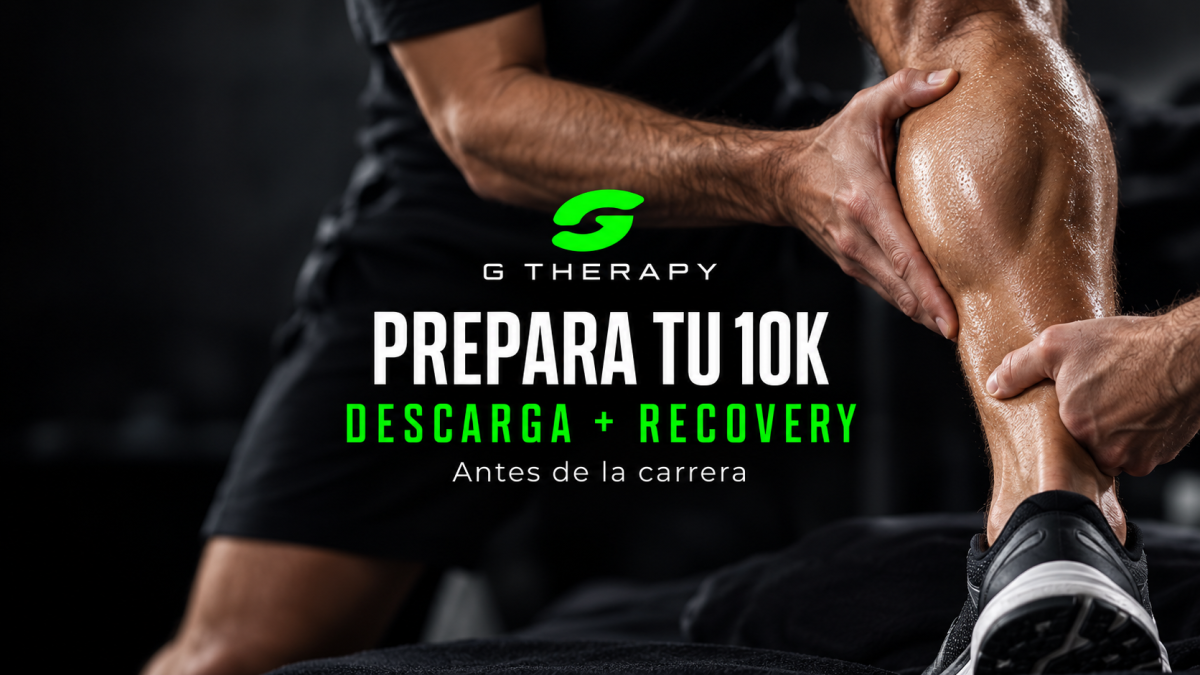
At G Therapy Center Miami, we work with active individuals, runners, and patients who don’t just want pain relief—they want to recover better, move better, and perform better.
After a race, depending on the case, an effective approach may include:
- Manual therapy
- Muscle release
- Sports massage
- Targeted mobility work
- Movement pattern assessment
- Compensation analysis
- Addressing accumulated overload
Because it’s not just about “getting rid of pain.”
It’s about understanding why it showed up, what’s maintaining it, and how to prevent it from slowing you down again.
If you ran Run Doral 2026, ask yourself this today
Be honest with these questions:
- Is my body just tired… or actually irritated?
- Am I improving each day, or staying the same?
- Am I walking normally or compensating?
- Am I listening to my body or just pushing through?
- Do I want to recover properly—or just wait and see?
Your answers matter, because they shape what happens next.
Running is good. Recovering well is better.
Completing a race like Run Doral 2026 deserves recognition. But what you do afterward matters just as much.
A proper recovery can be the difference between returning to training safely… or dragging a problem that slows you down later.
Don’t ignore the signals.
Don’t confuse toughness with neglect.
And don’t wait until things get worse to take action.
If after Run Doral 2026 you feel pain, stiffness, or discomfort that won’t fully go away, G Therapy Center Miami can help you assess what’s going on and guide you toward a smarter recovery.
Your race is over.
Now it’s your body’s turn to speak.
Did you run Run Doral 2026 and feel like something isn’t right?
Book your evaluation at G Therapy Center Miami and recover your body the smart way.